The short answer
In short: A roof shouldn’t be torn off or installed while it’s raining. Manufacturers require a dry, clean deck before underlayment goes down. In winter, though, reroofs work well here: crews schedule around storms, open only as much roof as they can cover the same day, and pause when rain is forecast. Southern California’s mild winters rarely get cold enough to affect shingles.
Why can’t roofers work in the rain?
- The deck has to be dry. Underlayment instructions from manufacturers such as Owens Corning and TAMKO call for a clean, dry deck. Covering wet wood traps moisture under the new roof.
- Self-adhered products need dry surfaces. Peel-and-stick membranes used in valleys and at edges don’t bond well to wet wood.
- Wet roofs are slippery. Underlayment and tile get dangerous when wet, for the crew and for the work.
- An open roof lets water in. Tearing off in rain sends water straight into the attic and ceilings.
How do crews handle rain on a winter reroof?
- Watch the forecast.Tear-off is scheduled for a stretch of dry days, not the day before a storm.
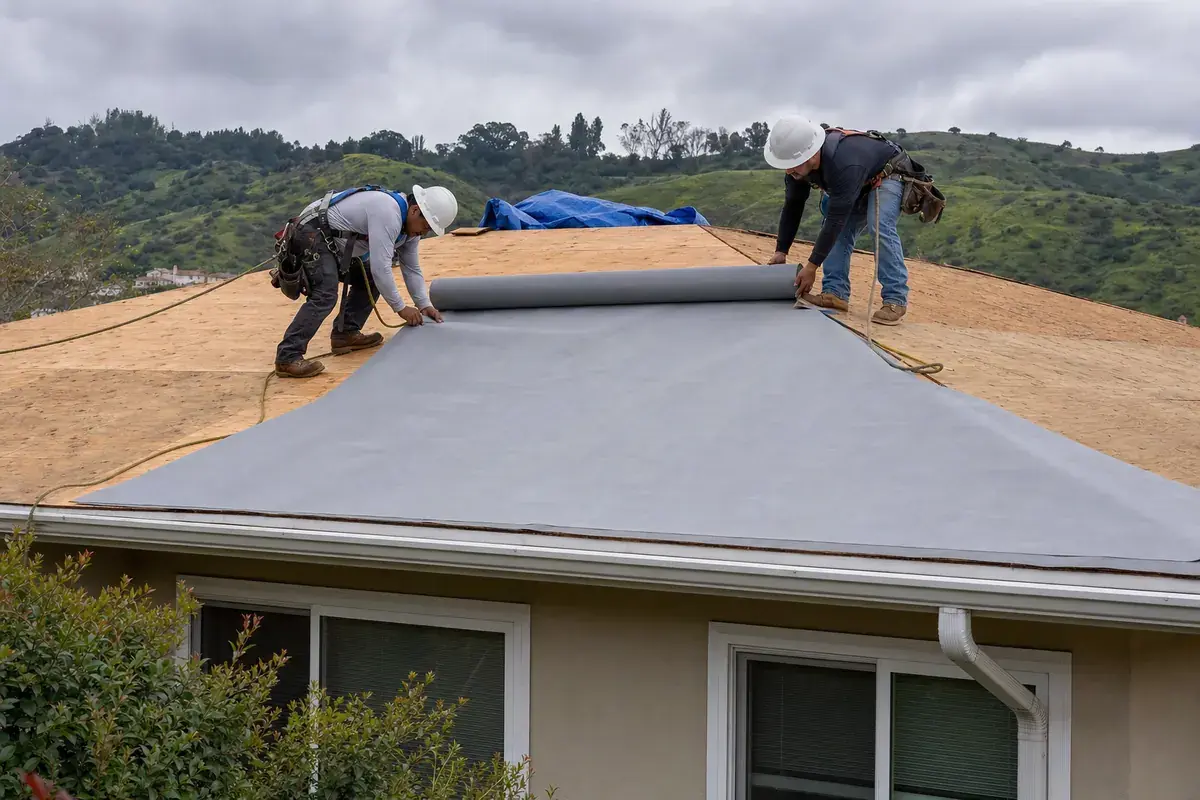
- Open only what can be covered.A careful crew removes only as much old roofing as it can cover with underlayment the same day.
- Tarp anything left open.If rain arrives early, open areas are covered before the crew leaves.
- Pause and dry out.Work resumes once the deck and underlayment are dry again.
That flexibility is why a written schedule leaves room for weather. See what to expect at home during a reroof.
Is it ever too cold to install a roof here?
| Roof type | What cold weather means |
|---|---|
| Asphalt shingles | Shingles seal to each other with heat-activated strips. At or below 40°F, Owens Corning calls for hand-sealing shingles with asphalt roof cement, because the strips may not seal until warmer weather. |
| Self-adhered underlayment | Many products list a minimum application temperature, often around 40°F, on their instruction sheets. |
| Clay and concrete tile | The tile itself isn’t affected by cold. The underlayment beneath it follows its own instructions. |
Daytime temperatures in Calabasas and the San Fernando Valley are usually well above 40°F, even in winter, so cold-weather steps are rarely needed. Early mornings can be chilly, so some work simply starts once the roof warms up.
Are there advantages to a winter reroof?
Yes. Winter avoids the hottest summer afternoons, when shingles get soft and roof surfaces are punishing for crews. It also fixes problems before the heaviest rain, which in Southern California usually falls between December and February. If your roof is near the end of its life, see how long a roof lasts and our repair or replace guide.
What if the roof is leaking right now?
Don’t wait for spring. Get the leak tarped or temporarily sealed to stop further damage, then plan the permanent fix for the next dry stretch. See emergency roof repair, and our storm damage guide if the leak came from a storm.
Planning a new roof this winter?
We’ll inspect the roof and build the schedule around the forecast. Call (818) 351-2918.
Frequently asked questions
What happens if it rains in the middle of my roof replacement?
Work stops while it rains. Any section that is open should already be covered with underlayment or tarped, so the house stays dry. The crew comes back once the deck and underlayment are dry again.
Is it too cold to install shingles in winter?
Rarely in Southern California. Shingle makers such as Owens Corning call for extra steps, like hand-sealing shingles with roof cement, when the air and roof surface are at or below 40°F. Daytime temperatures here are usually above that, even in winter.
Can I get a roof replaced during the rainy season?
Yes. Winter reroofs are common here because there are many dry days between storms. The schedule simply leaves room to pause for rain, so plan for some flexibility in the finish date.
My roof is leaking now. Should I wait for spring to replace it?
No. Get the leak tarped or temporarily sealed now to stop further damage, then plan the permanent repair or replacement for the next stretch of dry weather.
Sources
Owens Corning, Cold Weather Shingle Installation technical bulletin and WeatherLock Flex installation instructions; TAMKO, Synthetic Shield underlayment application instructions; Los Angeles Almanac, Los Angeles rainfall. Always follow the instructions for the specific products on your roof.