The short version
In short: Repair the roof when the damage is limited to one area and the rest of the roof is sound. Replace it when the roofing is worn across most of the roof, leaks keep coming back in new places, or the deck underneath is damaged in several spots. In fire zones like Calabasas, replacing more than half the roof brings the whole roof under current fire and energy rules, so a large repair can turn into a reroof.
One area or the whole roof?
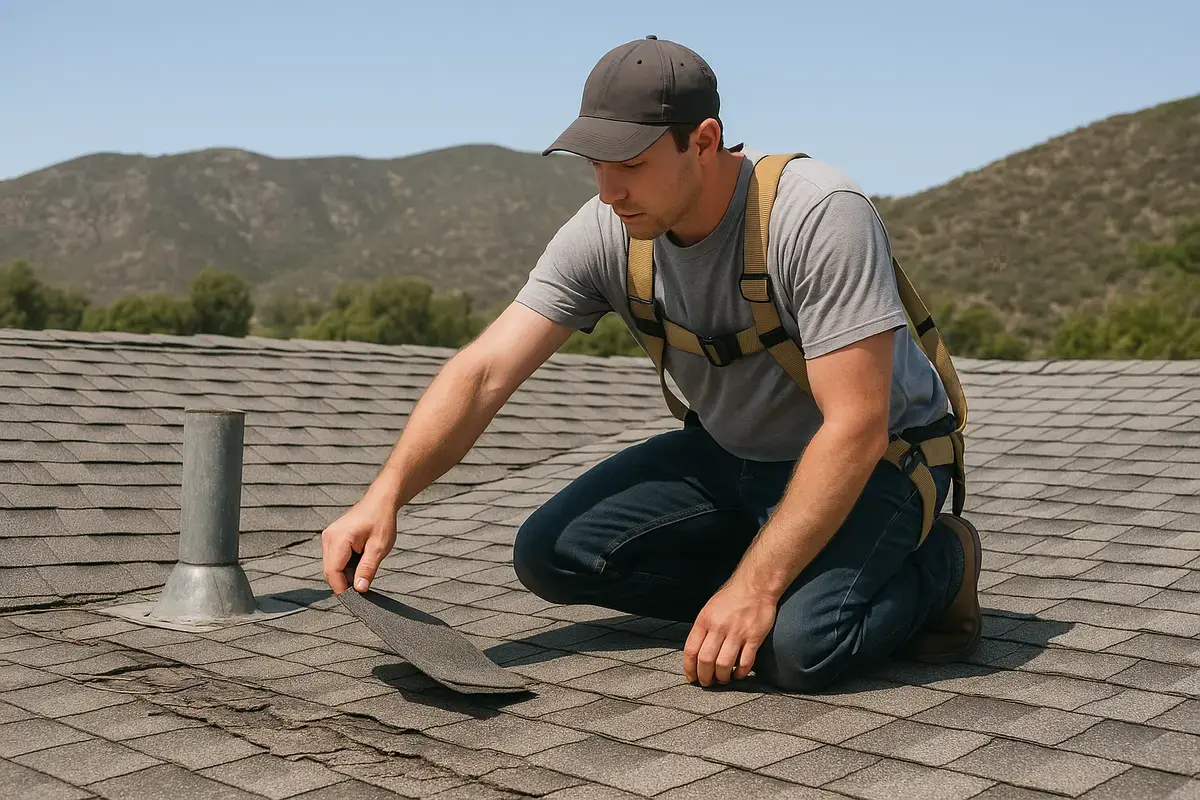
A single leak, a few slipped tiles, or one failed flashing is usually a repair.
Repeat leaks are a signal
New leaks in new places mean the roof as a whole is wearing out.
What’s underneath counts
Soft or rotted decking and worn underlayment can turn a small job into a big one.
Both need a permit
In Calabasas, repairs and replacements both need a reroof permit and inspections.
When a repair is enough
- The leak traces back to one spot: a vent, skylight, chimney, valley, or roof-to-wall joint
- Storm or wind damage is limited to a section, such as a few missing shingles or broken tiles
- The rest of the roof covering is flat, intact, and holding its granules or glaze
- The deck feels solid, with no sagging or soft areas
- It’s the first problem in years, not the third this season
A good repair fixes the cause, not just the stain. Most leaks start at flashing and penetrations, so that’s where we look first. See roof repair for the common fixes.
When replacement makes more sense
- Shingles are curling, cracking, or losing granules across most slopes, not just one
- Leaks keep appearing in different places after earlier repairs
- The roof deck is soft, sagging, or stained in several areas
- Flat-roof membranes are blistered, cracked, or ponding water across large areas
- Matching materials for a repair are no longer made, so patches would stand out
- You plan to stay for years and want one project instead of a series of repairs
See roof replacement for what a full reroof includes in Calabasas and nearby cities.
Signs you can check safely
Please stay off the roof: tile breaks underfoot and slopes are slippery. You can see a lot from the ground and the attic.
- From the ground.Look for missing, curled, or slipped shingles or tiles, sagging rooflines, and dark streaks or bare patches. Binoculars help.
- In the gutters.Lots of shingle granules (they look like coarse sand) mean the shingles are wearing out.
- In the attic.On a sunny day, look for daylight through the roof boards, water stains, damp insulation, or dark spots on the wood.
- Inside the house.Note ceiling stains and peeling paint near outside walls, and whether they grow after rain.
- Your records.Find the roof’s install date, any warranty, and past repair invoices. They tell us a lot about what’s left in the roof.
Tile roofs: often a third option
Clay and concrete tile usually outlasts the underlayment beneath it. When tile roofs leak, the answer is often a lift and relay: the tile comes off, new underlayment and flashing go on, and your same tile goes back. It’s neither a spot repair nor a new roof. Our tile roof underlayment guide explains how to tell when it fits.
Rules that can tip the decision
Overlays have limits. California’s code does not allow a new roof over an existing roof that already has two or more layers, over a roof or deck that is water-soaked or deteriorated, or over clay, concrete, slate, or asbestos-cement tile. In those cases the old roofing comes off down to the deck.
The 50% line in fire zones. In Very High Fire Hazard Severity Zones, which include Calabasas and much of the surrounding hills, replacing more than 50% of a roof within one year means the roof covering must be Class A. Calabasas already requires Class A roof assemblies. See our Class A fire-rated roofing guide.
Cool roof rules. California’s energy code can require a cool roof when more than half of a roof is replaced, depending on the building, roof slope, and climate zone. Our cool roofing page explains when it applies.
Permits either way. The City of Calabasas requires a reroof permit before any roof repair, recovering, or replacement begins, and inspects the work before signing off. Our Calabasas roof permit guide covers the steps.
How we help you decide
Every job starts with a free roof inspection. We photograph what we find on the roof and in the attic, then give you a written estimate. When a repair is a reasonable choice, the estimate shows the repair and the replacement side by side, so you can weigh how long each will last against your plans for the house.
Leaking right now?
Call (818) 351-2918. We can tarp or make a temporary repair first, then help you decide on the permanent fix. See emergency roof repair.
Frequently asked questions
Can I put a new roof over my old one?
Sometimes, on asphalt shingle roofs. California’s code does not allow a new layer over a roof that already has two or more layers, over a roof or deck that is water-soaked or deteriorated, or over clay, concrete, slate, or asbestos-cement tile. In those cases the old roofing comes off down to the deck.
Does a roof repair need a permit in Calabasas?
Yes. The City of Calabasas requires a reroof permit before any roof repair, recovering, or replacement work begins, and the work is inspected before the city signs off. See the permit guide.
Is it worth repairing an older roof?
Often, if the problem is limited to one area and the rest of the roof is sound. If you keep finding new leaks, the roof covering is worn across most of the roof, or the deck is damaged in several places, repairs tend to buy little time and a replacement is usually the better long-term choice.
Sources
City of Calabasas Building & Safety, “Roof Repair, Replacement & Covering” handout (revised January 2026); California Residential Code section R908.3.1.1, roof recover limits, as summarized in the Calabasas and Agoura Hills reroof handouts; California Health and Safety Code section 13132.7 (roof coverings in fire hazard severity zones); California Energy Commission, 2022 cool roof requirements. Requirements change, so we confirm current rules on every project. This guide is general information, not engineering advice.