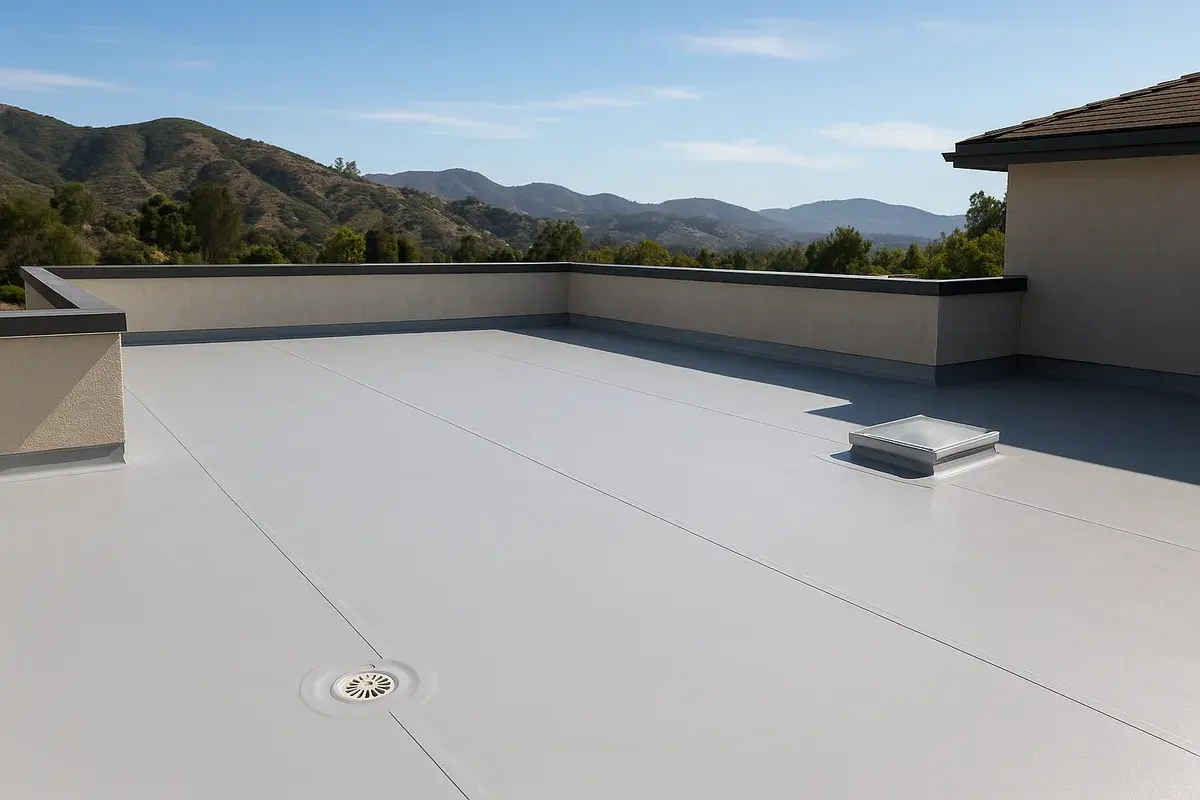
Flat roofs need different expertise
Low-slope roofs don’t shed water the way pitched roofs do. Success depends on proper slope to drains, watertight seams, and careful flashing at walls, parapets, and penetrations. That’s where we focus.
- TPO single-ply membrane systems
- Modified bitumen (torch-free options available)
- Elastomeric and silicone restoration coatings
- Tapered insulation to correct ponding water
- Drains, scuppers, and parapet flashing
- Leak repair and seam re-welding
Signs your flat roof needs attention
Ponding water
Water standing more than a couple of days after rain accelerates wear.
Blisters & cracks
Bubbles, splits, or alligatoring in the surface let moisture in.
Open seams
Lifting seams and loose flashing are the most common leak points.
Interior stains
Ceiling spots below a flat roof usually mean water is already getting in.
Make it a cool roof
White and reflective flat-roof systems can lower rooftop temperatures. See our cool roofing options.
Frequently asked questions
How long does a flat roof last?
Lifespan depends on the system, installation quality, sun exposure, and maintenance. Regular inspections and keeping drains clear make the biggest difference.
Can you coat my existing flat roof instead of replacing it?
Sometimes. If the existing roof is dry and structurally sound, a restoration coating may extend its life. We test for trapped moisture before recommending a coating.
More answers in our roofing FAQ, or read about how we work.
Related services
Where we work
We repair and replace flat roofs on homes, patio covers, and additions in Calabasas, Tarzana, Encino, Reseda, and all the communities we serve.