The short version
In short: Stay off the roof. Photograph the damage, then have the roof tarped or temporarily sealed to stop further damage, which California’s Department of Insurance says your policy expects. Report the claim to your insurer promptly, keep every receipt, and hold off on permanent repairs until the adjuster has seen the damage. Insurers must respond to a claim within 15 days.
Safety first
Wet, steep, or fire-damaged roofs are dangerous. Look from the ground.
Photograph it
Photos and video before anything is moved or covered.
Stop further damage
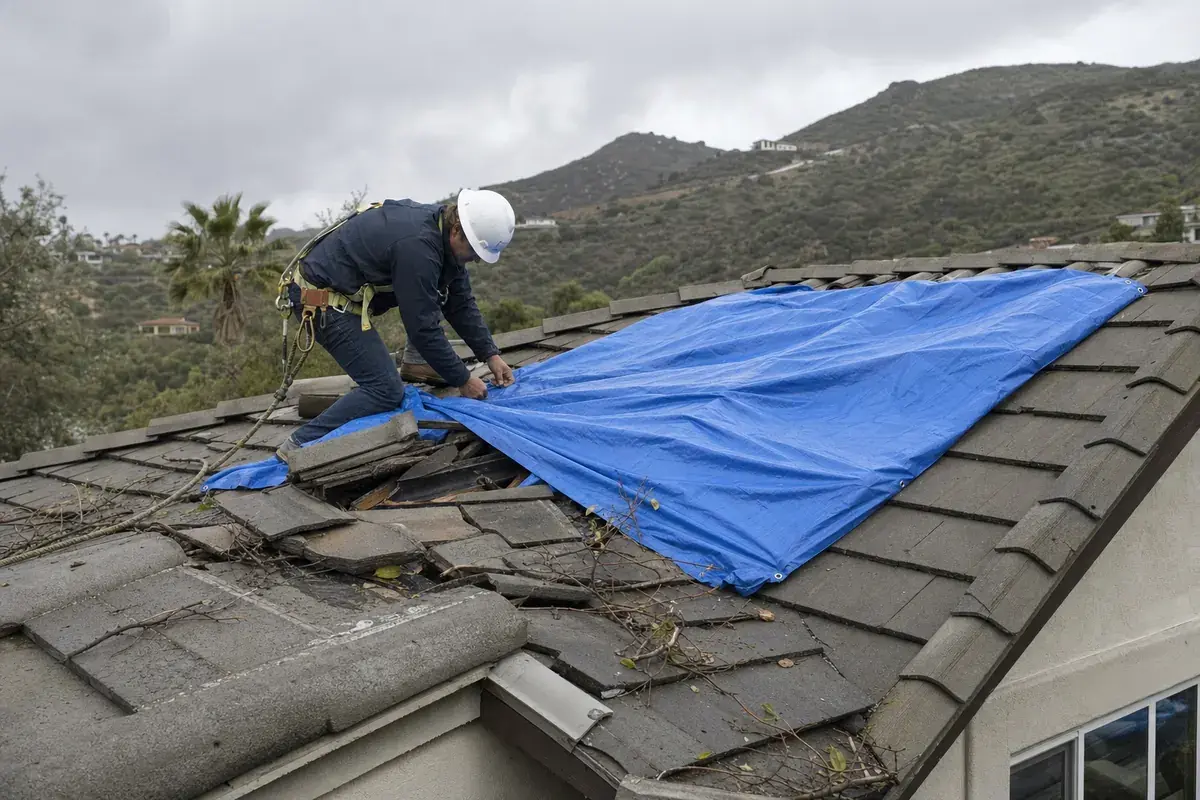
A tarp or temporary seal protects the house, and your claim.
Keep a claim diary
Every call, email, receipt, and estimate in one place.
First steps after the storm or fire
- Stay safe.Don’t climb onto a damaged roof. Keep away from downed power lines, and after a wildfire, follow official guidance before returning home.
- Document the damage.Take photos and video of the roof from the ground, the yard, the attic, and any interior water stains, before anything is cleaned up or covered.
- Prevent further damage.Have openings tarped or temporarily sealed. Keep the receipts: reasonable temporary repairs are usually part of the claim.
- Report the claim.Call your insurer or agent, write down your claim number, and ask for a copy of your full policy if you don’t have one.
- Wait on permanent repairs.Let the adjuster see the damage first, and don’t throw away damaged materials until the insurer says you can.
Need a tarp now? See emergency roof repair.
What roof damage looks like
After wind and rain
- Missing, lifted, or creased shingles, or shingle pieces in the yard
- Cracked, slipped, or missing tile, especially along ridges and edges
- Bent or loose flashing at chimneys, vents, and walls
- Branches on the roof or dents in gutters
- New water stains on ceilings or in the attic
After a wildfire nearby
- Ash and burned debris in gutters, valleys, and under the edges of tile
- Melted or damaged vent screens and plastic roof parts
- Scorched, cracked, or blistered roofing near the side that faced the fire
- A smoke smell in the attic
Even if the house didn’t burn, a roof inspection with photos shows whether anything needs repair, and gives you documentation for a claim.
How the claim process works in California
California’s Fair Claims Settlement Practices Regulations set deadlines for insurers:
| Step | What the insurer must do |
|---|---|
| Within 15 days of your claim | Respond, give you the forms and instructions you need, and begin investigating |
| Within 40 days of proof of claim | Accept or deny the claim, in whole or in part, or explain in writing why it needs more time |
| Within 30 days of your request | Send you a complete copy of your policy, at no charge |
After a declared disaster, such as a major wildfire, California law gives policyholders more time. You have at least 36 months to collect the full replacement cost of a covered loss, and extra time for additional living expenses. The Department of Insurance publishes the current rules for each disaster.
The Department of Insurance also suggests getting at least one estimate from a licensed contractor, since an insurer’s own estimate may miss local conditions. If you have trouble with a claim, its consumer hotline is (800) 927-4357.
Rebuilding in a fire zone
Calabasas and much of the surrounding hills are Very High Fire Hazard Severity Zones. A replacement roof there must be Class A fire-rated, and new or replaced vents need to resist embers. Our Class A roofing guide explains the rules, and our repair or replace guide covers when damage means a new roof. Permanent repairs still need the usual permit. See the Calabasas roof permit guide.
How we help
We tarp or temporarily seal the roof to stop further damage, then inspect and photograph everything once it’s safe. We provide photos, measurements, and a detailed scope you can share with your insurer. Your insurance company decides coverage. We make sure it has accurate information about your roof.
Roof damaged after a storm or fire?
Call (818) 351-2918. We’ll help you protect the house first, then document the damage.
Frequently asked questions
Should I wait for the insurance adjuster before tarping my roof?
No. The California Department of Insurance advises making temporary repairs, such as covering openings with plastic sheeting or plywood, to prevent further damage, and warns that a policy may not cover later damage if you didn’t take reasonable steps to protect the property. Photograph the damage first, then hold off on permanent repairs until the adjuster has seen it.
How long does my insurance company have to respond to a claim in California?
Under California’s Fair Claims Settlement Practices Regulations, an insurer must respond to a notice of claim within 15 calendar days, provide the forms and instructions you need, and begin its investigation. Once it receives proof of claim, it must accept or deny the claim, in whole or in part, within 40 calendar days, or explain in writing why it needs more time.
My house didn’t burn. Should I still have the roof checked after a wildfire?
Yes. Embers can collect in gutters, valleys, vents, and under the edges of tile, and nearby fire can damage roofing, flashing, and vent screens. A roof inspection with photos shows what, if anything, needs repair and gives you documentation if you file a claim.
Does a roofing contractor decide what insurance covers?
No. Your insurance company decides coverage under your policy. A roofer can give you photos, measurements, and a written scope of the damage to share with your insurer, so the adjuster has accurate information about your roof.
Sources
California Department of Insurance, Residential Property Claims Guide and Top Ten Tips for Wildfire Claimants; California Code of Regulations, Title 10, § 2695.5 and § 2695.7 (Fair Claims Settlement Practices Regulations); California Insurance Code § 2051.5. This guide is general information, not legal or insurance advice. Your policy and your insurer decide what is covered.